
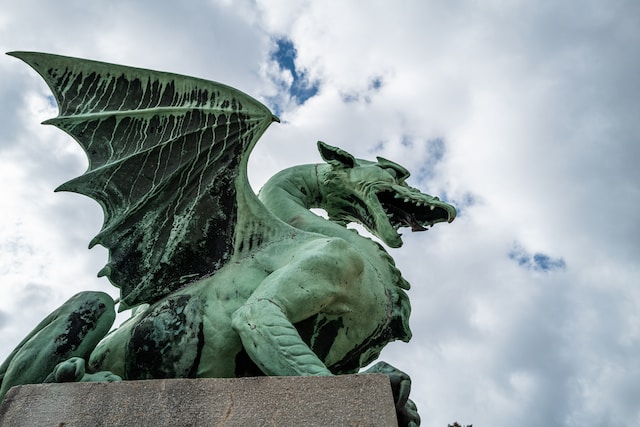
In the vibrant tapestry of Ljubljana’s architectural gems, the Dragon Bridge (Zmajski Most) not only adds a stroke of historical elegance but also infuses a mythical allure into the city’s scenery. Guarded by its iconic dragon statues, the bridge isn’t just a pathway over the Ljubljanica River but a leap into the imagination, captivating visitors and locals alike since the dawn of the 20th century.
Imagine walking through the heart of Ljubljana and stumbling upon the fierce gaze of the four dragon statues perched on the Dragon Bridge. These formidable creatures, embodying a blend of awe and near-realism, have been the guardians of the city’s lore and one of the most photographed spectacles in the city. The sentiment stands undisputed: a sojourn in Ljubljana is incomplete without witnessing the dragons that provoke the latent fantasies of every beholder.
However, the Dragon Bridge, completed in 1901, isn’t merely about its mythical sentinels. It’s a testament to the technical prowess and architectural vision of an era fascinated by Art Nouveau’s grace, a style emphasizing natural forms and structures. The bridge celebrated its inauguration as the ‘Jubilee Bridge of Emperor Franz Joseph I,’ marking a transformative era in Ljubljana’s infrastructural saga. It wasn’t just the city’s first dalliance with reinforced concrete but stood as one of Europe’s largest bridges of this genre, signaling Ljubljana’s readiness to be on the architectural forefront.
Amid the swirling mists of history, an intriguing detail lingers the original blueprint of the bridge, conceived by renowned engineer and professor Josef Melan, significant for his contributions to the theories essential for suspension bridges, ordained the structure with winged lions. Yet, destiny, with its unpredictable artistry, replaced the lions with the dragons, giving Ljubljana a distinctive emblem that intertwines with its identity.
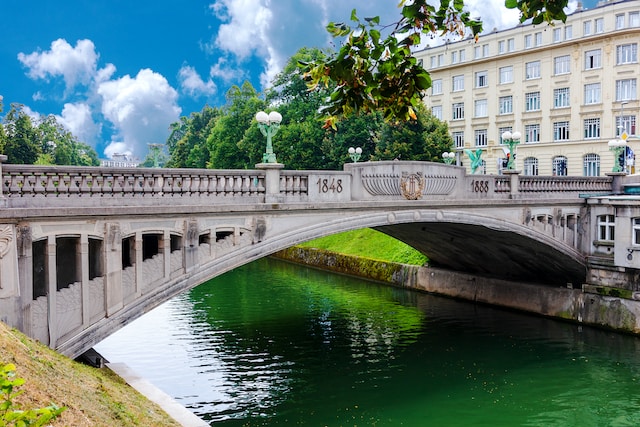
The responsibility of shaping the bridge’s Art Nouveau spirit was entrusted to Dalmatian architect Jurij Zaninović, a pupil of the illustrious Otto Wagner of Vienna, whose legacy includes mentoring Ljubljana’s architectural genius, Jože Plečnik. Zaninović, transcending the utilitarian, envisioned the Dragon Bridge as an aesthetic triumph. He meticulously designed the concrete slabs, the balustrades, and the sheet-copper dragon statues, each element contributing to a harmonic whole. The historical charm was further enhanced by the original gas-powered parapet lamps, adding a warm glow to the mystic aura.
The Dragon Bridge, however, was also a narrative of practicality over tradition, replacing the old wooden ‘Butchers’ Bridge’ that had served since 1819. The choice of reinforced concrete over conventional stone was not merely a nod to modernism but a prudent economic decision. This prudent shift marked Ljubljana’s journey towards a future where innovation and cost-effectiveness merged.
Today, the Dragon Bridge stands as a cultural monument, an open-air gallery of technical evolution, artistic expression, and mythical narratives in the heart of Ljubljana. It is more than a bridge; it is a storyline that every tile, every dragon scale, and every lamp post shares with those who cross it. Whether steeped in history, enraptured by art, or seeking the thrill of dragon lore, a stroll across this legendary bridge promises a silent dialogue with the chapters of the past and an unspoken understanding of Ljubljana’s spirit.