Imagine a place where the echoing past meets the pulsating present, where architectural wonders serve as silent narrators of history, and where every street, river, and bridge tells a story. Welcome to Mostar, a city that thrives on its contrasts and harmonizes the resonances of both East and West.
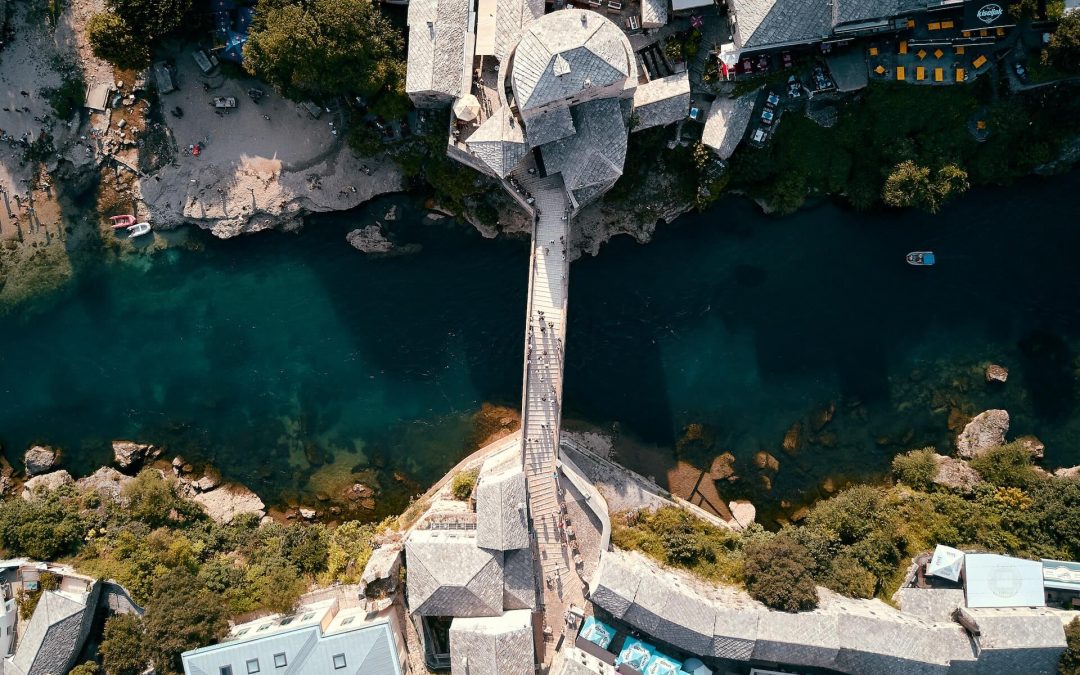
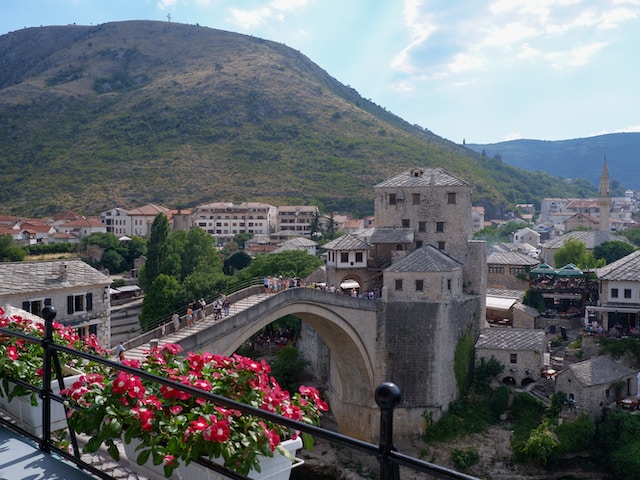
Nestled in the scenic heartland of Bosnia and Herzegovina, Mostar is a city like no other. Known for its iconic Stari Most (Old Bridge), a humped masterpiece that seems to leap across the emerald waters of the Neretva River, Mostar is a mosaic of cultures, religions, and epochs that refuse to be forgotten.
A Stroll Through Time and Tradition
Embraced by the warmth of the sun and the whispers of historical tales, a day in Mostar begins on its enigmatic cobblestone streets. The city, an emblem of contradiction and coexistence, welcomes every visitor with open arms and an unspoken promise of uncovering the world’s hidden stories. As you lose yourself in its labyrinth of history, culture, and tradition, you are enveloped by a sense of intrigue that only deepens with each step.
Amid the city’s architectural tapestry, the minarets of venerable mosques etch the skyline, standing sentinel over centuries of shifting timelines. Their calls to prayer, soulful and echoing, rise in a harmonious symphony with the rhythmic bells of Catholic and Orthodox churches. This melodious interchange resonates through the air, a testament to Mostar’s multicultural heart and its embrace of religious diversity. It’s a living, breathing melody that serenades the unity found within the city’s unique cultural mosaic.
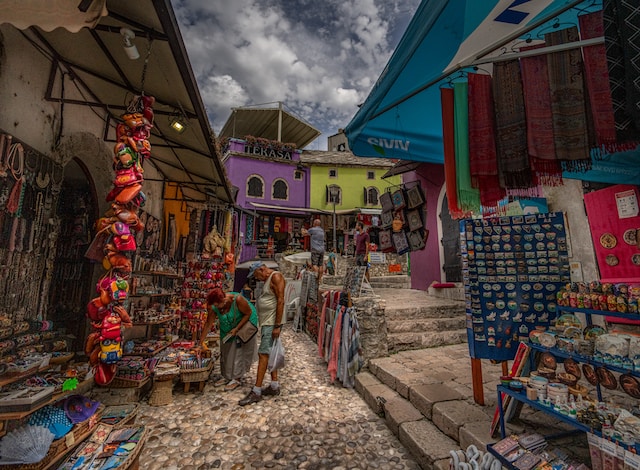
Your journey may lead you to the pulsating artery of Mostar’s spirit: the Old Bazaar, Kujundziluk. Stepping into this vibrant market feels like walking into a kaleidoscope of cultures. The air buzzes with the cadence of commerce, a language universally understood. Here, tradition meets artistry and the past converses with the present in the most colorful manner.
Each market stall is a treasure trove, brimming with crafts that tell of Bosnia and Herzegovina’s complex heritage. Your fingers might trace the intricate patterns of hand-woven textiles, each thread intertwined with stories passed down through generations. Vivid copperware, crafted with techniques preserved from the Ottoman era, glints under the sun, reflecting the city’s resilience and artistic spirit.
But it’s not just your eyes that feast on the bazaar’s wonders; the scents percolating through the air are a banquet all their own. The rich, almost earthy aroma of traditional Bosnian coffee mingles with the tantalizing fragrance of ćevapi. This beloved street food, with its sizzling grilled minced meat joyfully ensconced in somun (a type of Bosnian pita bread), promises an authentic taste of local cuisine.
The eateries, many of them family-run establishments, are bustling with a mix of locals and travelers. They serve not only as spaces for culinary indulgence but also as hubs of communal life, reverberating with animated conversation and hearty laughter. It’s easy to get invited to a table and even easier to feel like you’ve been a part of the community your whole life.
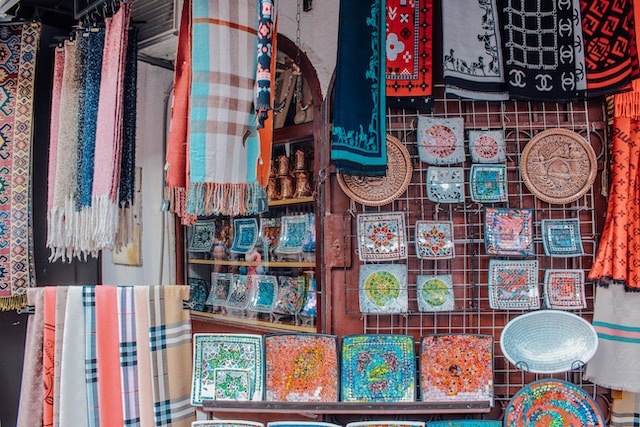
As the day wanes, the rhythm of the bazaar gradually shifts. The vendors, with hands weathered from a lifetime of craft, begin packing their wares, and the tantalizing aromas start to dissipate. Yet, the spirit of Mostar, resilient and ever-welcoming, doesn’t fade. It invites you to return, to explore deeper, and to keep listening to the stories it yearns to tell. This city, etched by tradition and time, continues to be a testament to the beauty of cultural symphony and the enduring allure of human connection.
The Bridge That Connects the Dots
In the heart of Mostar, arching with an almost impossible grace over the reflective waters of the Neretva River, stands the Stari Most, or the Old Bridge, an everlasting symbol of unity and the centerpiece in the city’s rich cultural tapestry. Constructed in the 16th century, during the peak of the Ottoman Empire’s influence in the Balkans, this feat of architectural elegance and engineering prowess has, for centuries, been more than just a physical connection between two riverbanks.
The Stari Most was an iconic masterpiece conceived by Mimar Hayruddin, a student of the legendary architect Sinan, often considered the father of classic Ottoman architecture. With its single, humpbacked arch, and captivating, almost fluid stonework, the bridge was a reflection of human ingenuity, mirroring the sky during the day and holding the stars at night, enduring as a pathway across the river and beyond, into realms of shared histories and united futures.
However, the 1990s Yugoslav wars shadowed the region with conflict and left an indelible mark on Mostar. The Stari Most, which had stood as a symbol of connection and unity for 427 years, was not spared, crumbling under the violence that shook the very identity of the city. Its destruction in 1993 was more than a physical loss; it seemed as though the very spirit of Mostar fractured with the falling stones, casting echoes of dismay that were felt worldwide.
Yet, the spirit of Mostar and its people, inherent in the bridge, endured. The international community and local authorities came together in a symbolic act of cultural preservation and peacebuilding. Like a phoenix rising, the Stari Most was reconstructed meticulously, utilizing traditional methods and materials, even salvaging the original stones from the river’s embracing depths. In 2004, with the world watching, the bridge reopened, resilient and resolute, a testament to the courage and unity of the people of Mostar. It reconnected the city’s wounds, standing once again as a monument to peace, endurance, and the power of reconciliation.
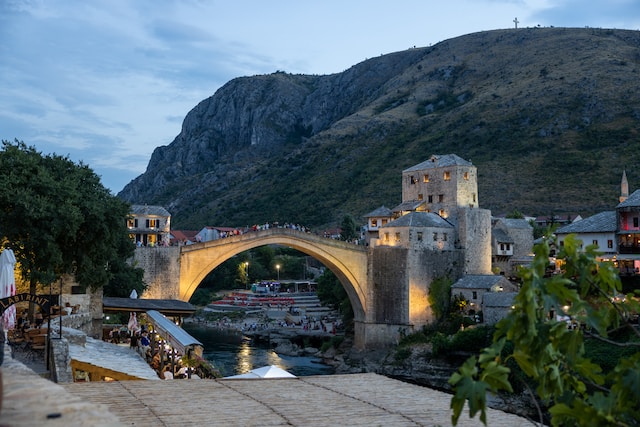
But the Stari Most is more than a historical landmark; it pulses with living tradition. Each year, the air around the bridge thickens with anticipation and excitement as the annual Stari Most diving competition takes center stage. In a breathtaking display of bravery, divers plunge from the bridge’s apex, a dizzying 24 meters into the icy, swirling currents of the Neretva below. This death-defying leap, practiced since the bridge’s original construction, is a rite of passage for the young men of Mostar, symbolizing the bravery, mastery, and continuation of tradition. It’s a heart-stopping spectacle that unites spectators and competitors alike, drawing awe-struck audiences from around the globe.
A Living Canvas for Street Art
In recent years, a new form of expression has blossomed on the historical stage of Mostar, turning the city into a dynamic gallery of contemporary street art. Amidst the backdrop of architectural relics and silent, stone witnesses of times long past, vibrant murals have sprung up like visual poetry across the city’s walls. These bursts of creative expression are not random or frivolous; they are echoes of Mostar’s heartbeat, painted in a spectrum of colors, each stroke representing voices of the present and hopes for the future.
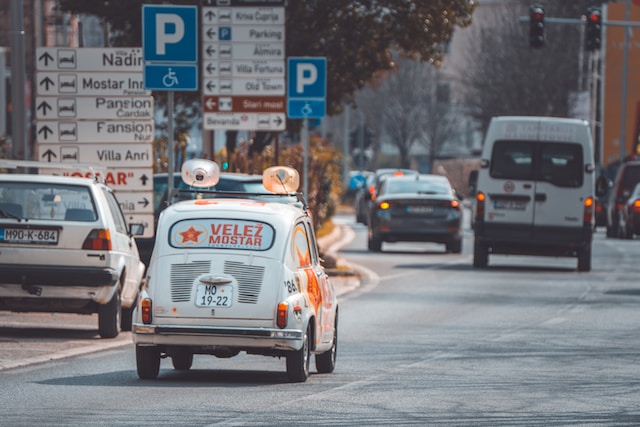
International and local artists, inspired by the city’s resilience, have turned scars into masterpieces, painting over the bullet marks and cracked facades with images of hope, struggle, and dreams of reconciliation. These visual storytellers are not erasing history but weaving it into a broader narrative. They invite onlookers into a dialogue, urging them to question, reflect, and engage with Mostar’s spirit. Each piece of art, whether it’s a mural depicting peace and unity, a stencil crying out against injustice, or abstract expressions of cultural identity, contributes to the conversation Mostar is having with the world.
Harmony in Diversity
As dusk hugs the city, Mostar undergoes a magical transformation. The setting sun paints the sky in hues of melancholy, while the lights awaken, turning the cityscape into a shimmering spectacle. The Stari Most steals the nocturnal show, bathed in lights that highlight its arch and contour, its majestic form casting a luminous reflection upon the gently flowing Neretva River below.
Nightlife in Mostar is not about flashy clubs and the rapid beat of modern music; it’s an immersive dive into its cultural tapestry. Cozy, ambient taverns serve up local culinary delights, where you can savor the rich flavors of traditional Bosnian cuisine, the robust tastes of local wines, and the heart-warming sweetness of rakija (fruit brandy), all staples of the region’s hospitality. The air is often filled with the soulful sounds of live Sevdah—the music that captures the essence of the Bosnian spirit. Often likened to the blues, Sevdah’s melancholic melodies and poignant lyrics offer a musical journey through tales of love, loss, and life’s bittersweet beauty.
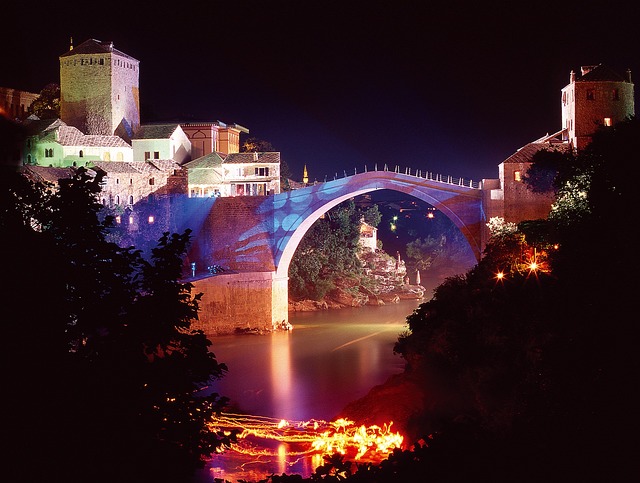
In Mostar, the past and present, tradition and innovation, don’t just coexist—they blend in harmonious symphony. The city, with its buzzing café culture and serene riverside lounges, invites visitors to become more than just spectators. To be in Mostar is to interact, to feel, to live. It’s a place where stories are not just told but are experienced in vivid color, taste, sound, and emotion. From the resilience etched in its historic walls to the hopeful art that adorns them, Mostar stands as a testament to life itself—continuously moving, adapting, and beautifully diverse.