
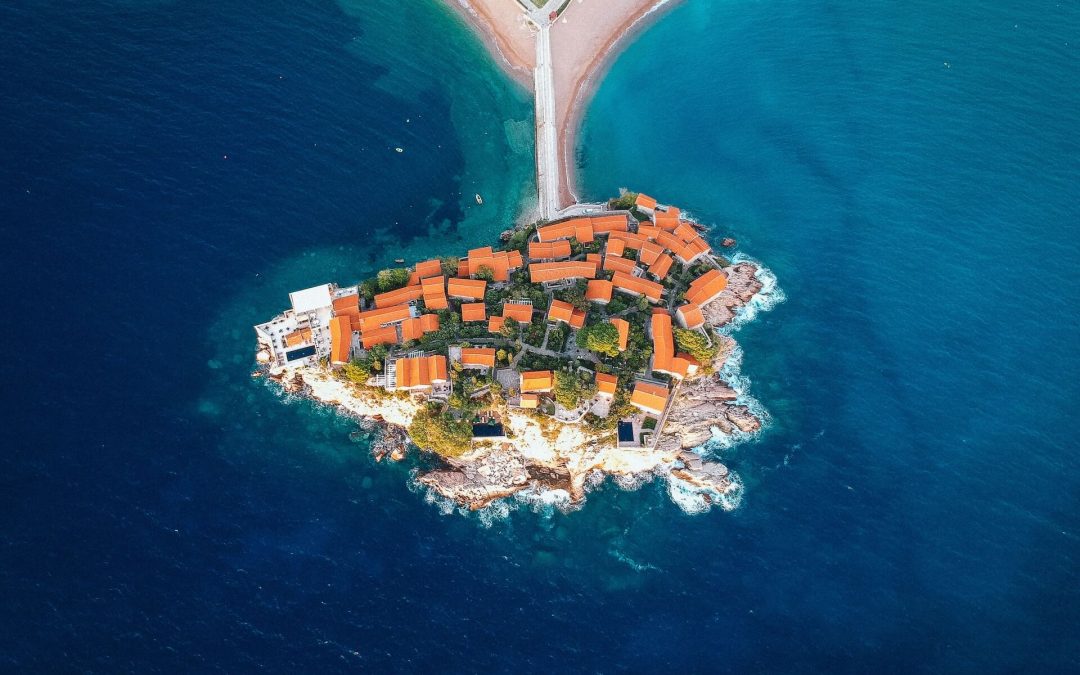
Montenegro, known for its dramatic natural landscapes, ranging from rugged mountain peaks to crystal-clear coastal waters, is also home to architectural wonders that harmonize beautifully with their natural surroundings. The integration of architecture into these environments speaks to a deep respect for nature and a desire to preserve the country’s cultural heritage. Here, we explore several key sites where human ingenuity and nature’s elegance coexist in Montenegro.
Sveti Stefan (Saint Stephen)
Sveti Stefan stands as a unique architectural feat on the Adriatic coast. Once a fortified village dating back to the 15th century, it has now been transformed into a luxury resort. What makes Sveti Stefan remarkable, apart from its exclusive allure, is how the stone buildings with their terracotta roofs blend harmoniously with the rocky peninsula and surrounding landscapes. The island is tethered to the mainland by a narrow, isthmus, ensuring its connection with the coast. The preservation of its medieval architecture, amidst the backdrop of the azure sea and lush Mediterranean forestry, encapsulates a harmonious balance between the old-world human settlement and the natural beauty of the Adriatic coast.
Our Lady of the Rocks (Gospa od Škrpjela)
Situated in the Bay of Kotor, this man-made island harbors a Roman Catholic church, Our Lady of the Rocks, with a history steeped in local maritime tradition. The island itself was created by bulwark of rocks and sunken ships, and over time, a church was built in honor of the sailors’ patron saint. The church, with its robust, simplistic architecture and a blue-domed roof, complements the sapphire waters of the bay. Despite being man-made, the island blends seamlessly with the surrounding natural and cultural landscape, maintaining the bay’s serene and historic ambiance.
Ostrog Monastery
Carved into an almost vertical cliff face, Ostrog Monastery is a feat of architectural audacity and spiritual significance. Established in the 17th century, this Serbian Orthodox monastery seems to defy gravity, nestled within the rock face about 900 meters above the Zeta valley. The white walls of the upper monastery, housing relics of the revered Saint Basil of Ostrog, stand in stark, yet harmonious contrast to the dark, rugged cliffs. This site not only represents a religious landmark but also an iconic blend of human craftsmanship and one of Montenegro’s most dramatic natural settings.
Durmitor National Park Architecture
In the midst of Durmitor National Park, human settlements and traditional Montenegrin mountainous architecture exemplify a harmonious existence with nature. The small villages and shepherd settlements (katuns) within the park boundaries are constructed using natural materials such as wood and stone, minimizing the visual impact on the surrounding landscapes. These structures, often characterized by their simple, functional design, echo the shapes and colors of the Durmitor mountain range, blending naturally into the environment without detracting from the park’s raw beauty.
These architectural wonders in Montenegro underscore a deeper philosophy that transcends time and progress: a reverence for the natural world that is inherently woven into the fabric of the nation’s identity. Through these structures, from luxury resorts to sacred monasteries, the architectural narrative of Montenegro tells a story of respect, coexistence, and harmony with the land’s natural majesty.